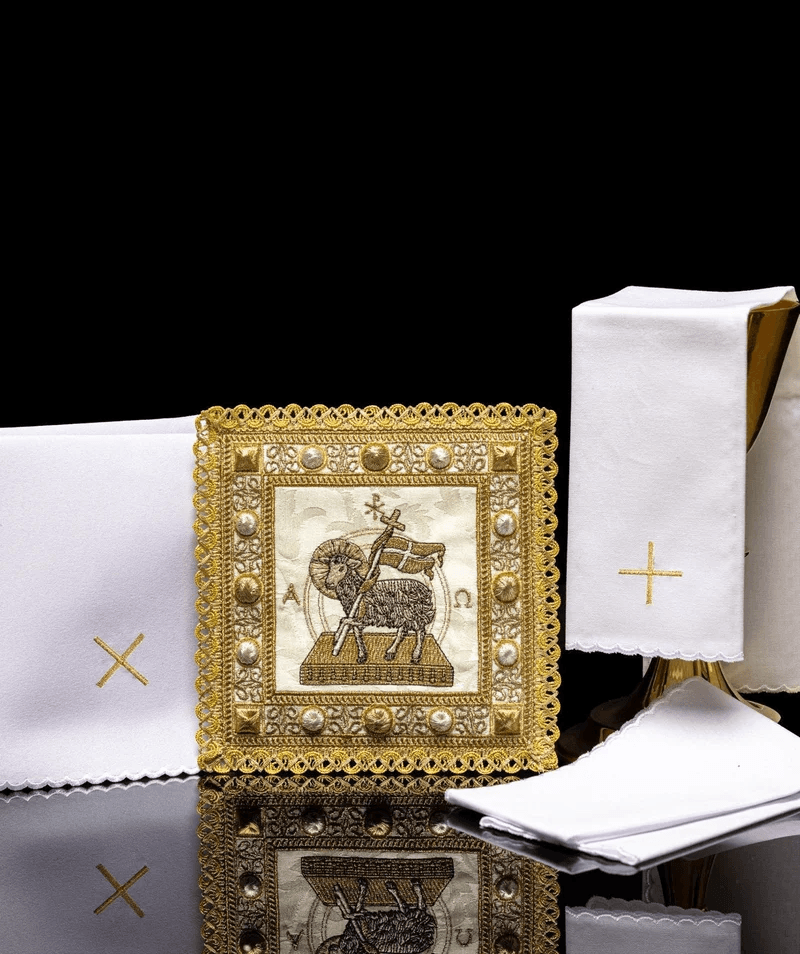
The Easter Lamb, also known as the Agnus Dei, is one of the most profound and ancient symbols in Christian tradition. Its presence on liturgical vestments, particularly chasubles, carries a rich tapestry of theological meaning, especially during the solemnity of Easter and throughout the Paschal season. When we encounter chasubles adorned with this powerful emblem, we are invited into a deeper reflection on the core tenets of our faith: sacrifice, redemption, and the ultimate victory over death.
The Genesis of the Easter Lamb Symbol
The symbolism of the lamb in Christian art and liturgy originates from the Old Testament, where lambs were frequently offered as sacrifices to atone for sins. The most significant precursor is the Passover lamb, whose blood, spread on the doorposts of the Israelites, protected them from the final plague in Egypt (Exodus 12). This act of salvation through the sacrifice of an innocent lamb laid the groundwork for the New Testament understanding of Jesus Christ as the ultimate sacrifice.
In the New Testament, John the Baptist famously identifies Jesus as “Behold the Lamb of God, who takes away the sin of the world!” (John 1:29). This declaration unequivocally links Christ’s mission to the sacrificial lamb. His innocent suffering and death on the cross are seen as the perfect and final atonement for humanity’s sins, fulfilling the prophecies and foreshadowings of the Old Covenant.
Visual Representations and Their Meaning
Chasubles featuring the Easter Lamb motif typically depict the lamb in a few common ways, each laden with specific meaning:
- The Lamb Standing with a Banner: This is perhaps the most iconic representation. The lamb, often shown with a halo, stands proudly, holding a banner that typically bears a red cross on a white field. The banner symbolizes Christ’s victory over death and sin, signifying His resurrection. The cross is the instrument of His sacrifice, but here it is elevated to a symbol of triumph.
- The Lamb with a Chalice or Paten: Sometimes, the lamb is depicted with a chalice, into which its blood flows, or with a paten bearing a host. This imagery directly connects the lamb to the Eucharist, the sacrament that commemorates Christ’s sacrifice and allows believers to partake in its redemptive power. It underscores the sacrificial nature of the Mass, where Christ’s sacrifice is made present.
- The Lamb with the Seven Seals: In some more elaborate depictions, the lamb is shown holding a book sealed with seven seals, as described in the Book of Revelation (Revelation 5:1-14). This refers to Christ’s divine authority and His role as the one worthy to open the scroll and reveal God’s plan for salvation. It highlights His majesty and ultimate sovereignty.
The lamb itself is often depicted as white or with a golden fleece, symbolizing purity, innocence, and divinity. Its posture, whether standing serenely or bearing the marks of sacrifice, conveys a message of peace and the assurance of redemption.
Symbolism During the Easter Season
The Easter season, from Palm Sunday through Pentecost, is the period where the Easter Lamb motif is most fitting and potent. During this time, the Church celebrates Christ’s Passion, Death, and Resurrection – the very events that the Agnus Dei symbolizes.
- Sacrifice and Atonement: The Paschal Triduum (Holy Thursday, Good Friday, and Holy Saturday) leads us through the sacrificial offering of Christ. Chasubles with the lamb motif serve as a visual reminder of this ultimate act of love and obedience.
- Resurrection and Victory: Easter Sunday is the feast of the Resurrection. The lamb bearing the banner of victory is a powerful visual representation of Christ’s triumph over the grave. It offers hope and assurance to the faithful that through Him, death is conquered.
- New Life and Redemption: The lamb’s sacrifice paved the way for new life in Christ. The ongoing celebration of the Easter season allows the faithful to dwell in the reality of this redemption and the promise of eternal life. The lamb motif on vestments reinforces this message of rebirth and renewal.
Beyond Easter, the motif of the Easter Lamb remains relevant throughout the liturgical year, particularly in the context of the Eucharist. It serves as a constant reminder of the foundational sacrifice upon which Christian faith is built.
Choosing a Chasuble with the Easter Lamb Motif
When selecting a chasuble with the Easter Lamb motif, several factors come into play, ensuring both aesthetic appeal and theological resonance:
- Embroidery Quality: The intricacy and quality of the embroidery are paramount. A well-executed lamb motif, with detailed stitching and appropriate use of metallic threads, enhances the visual impact and spiritual depth of the vestment.
- Fabric and Color: While the lamb itself often symbolizes purity, the color of the chasuble can also convey specific meanings during different liturgical seasons. White and gold are traditional for Easter and other feasts of Christ, while red can be used for feasts of martyrs or for Pentecost, symbolizing the blood of Christ and the fire of the Holy Spirit.
- Style of the Chasuble: Whether a more traditional Roman style or a contemporary cut, the lamb motif can be adapted to various designs, ensuring it complements the overall aesthetic of the vestment.
- Placement of the Motif: The lamb can be a central feature on the front or back of the chasuble, or it might be incorporated into the orphreys (decorative bands) or as a repeating pattern. The placement can influence the prominence and impact of the symbolism.
A chasuble featuring the Easter Lamb is more than just a piece of liturgical attire; it is a visual sermon, a tangible reminder of the central mystery of the Christian faith. It invites the wearer and the congregation to contemplate the profound sacrifice of Christ and the glorious hope of the Resurrection, making it a particularly fitting choice for the most sacred celebrations of the liturgical year.